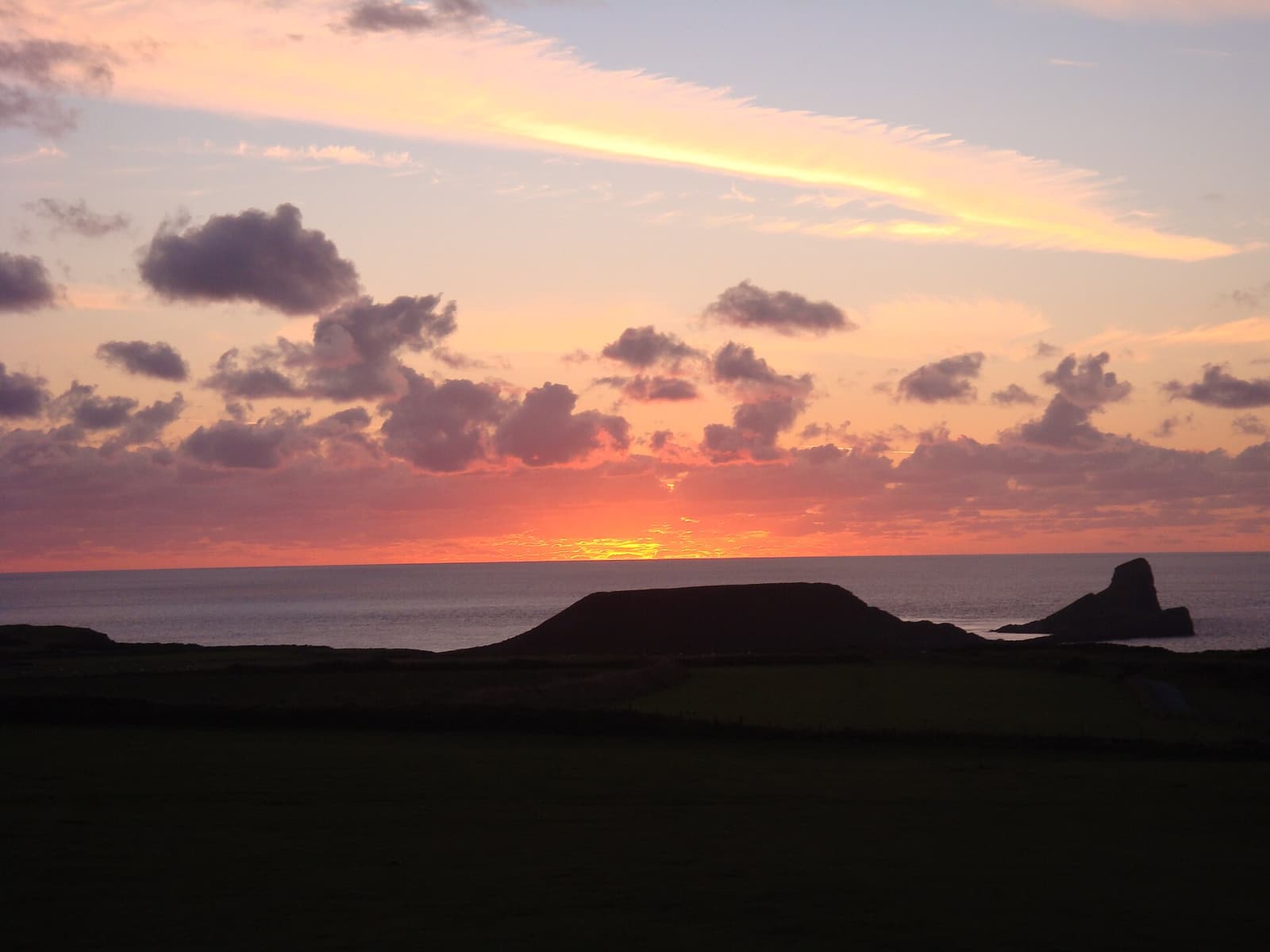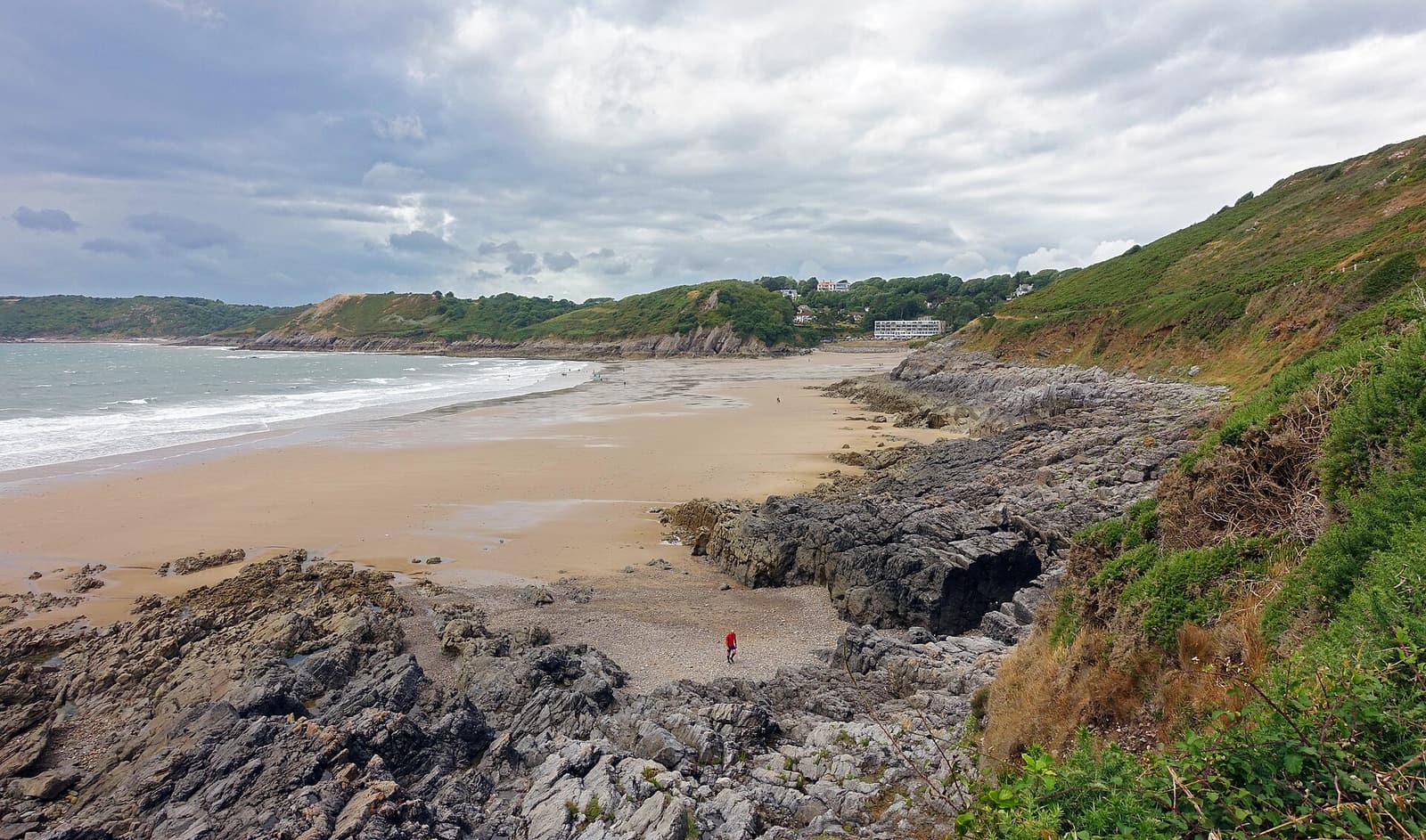
The short answer: May to September is the season for beaches and long days, and within it May, June and September give you the best balance of weather, daylight and elbow room. July and August are warmest and busiest. Winter is mild, wet and wild — and for many walkers and surfers, the best time of all.
Swansea Bay has a maritime climate: rarely hot, rarely freezing, often breezy and never entirely predictable. Rain can arrive in any month, and so can a week of unbroken sunshine. The figures below are long-term averages, not promises.
The seasons, compared
| Season | Daytime temp. | Sea temp. | What to expect |
|---|---|---|---|
| Spring (March–May) | 10–16 °C | 9–12 °C | Drier and brighter as it goes on; wildflowers on the cliffs; gardens at their peak in May; quiet beaches |
| Summer (June–August) | 18–21 °C | 14–18 °C | Longest days, warmest sea, lifeguards on duty; busy car parks and higher prices in the school holidays |
| Autumn (September–November) | 11–18 °C | 13–17 °C | September is often settled and the sea is at its warmest; storms and the best surf arrive from October |
| Winter (December–February) | 7–9 °C | 8–10 °C | Mild but wet and windy; short days; empty beaches, big seas and cosy pubs |
Spring: March to May
Spring comes early on this coast. By April the cliff tops are bright with thrift, squill and gorse, and by May the rhododendrons of Clyne Gardens are in full flower. April to June is, on average, the driest part of the year. The sea is still cold, but walking weather is often perfect and accommodation is good value outside Easter and the late-May half-term week.
Summer: June to August
June brings the longest days — it is light until about ten at night — and usually calmer, clearer weather than high summer. The Welsh school holidays run from late July to the end of August: that is when Gower’s car parks fill by mid-morning, campsites are busiest and prices peak. The sea is warm enough for most people to swim without a wetsuit by August. Seasonal lifeguards, land trains, beach cafés and the open-air attractions are all running.
Summer strategy: start early or go late. Gower’s west-facing beaches are at their most beautiful after five in the evening, when the day-trippers have gone.
Autumn: September to November
September is the insiders’ month: the sea is at its warmest, the children are back at school and the weather is often settled. October brings the first Atlantic storms, superb surf at Llangennith, autumn colour in the wooded valleys and the Dylan Thomas birthday festival. By November days are short and many seasonal businesses on Gower have closed or cut their hours.
Winter: December to February
Winter on Swansea Bay is mild — snow at sea level is unusual — but it is the wettest and windiest time of year, with daylight from about eight until four. The rewards are real: storm-watching from Rhossili, empty sands, low prices, museums to yourself and the waterfalls of the Brecon Beacons in full spate. Check opening times, as castles and some attractions close for the season, and expect a reduced bus service to Gower.
Events worth planning around
- May: Clyne in Bloom at Clyne Gardens.
- Early July: the Wales Airshow, a free two-day air display over Swansea Bay that draws very large crowds — book accommodation early.
- August: the Gower Show, a traditional agricultural show, usually on the first Sunday.
- September: the Swansea Bay 10k road race along the seafront.
- Autumn: the Swansea International Festival of music and arts.
- 27 October – 9 November: the Dylan Thomas birthday festival.
- November–January: Waterfront Winterland, with an ice rink and fairground, and Christmas events in Swansea and Mumbles.
Dates change from year to year — confirm them before you book.
Best time for…
- Beaches and swimming: late June to mid-September.
- Coast-path walking: April to June and September to October.
- Surfing: autumn and winter for experienced surfers; summer for beginners’ lessons.
- Gardens: May for Clyne; July and August for the Singleton Botanical Gardens.
- Waterfalls: after rain, at any time of year — most impressive from autumn to spring.
- Low prices and no crowds: November to March, outside Christmas and New Year.
What to pack, whenever you come
A proper waterproof jacket, a warm mid-layer, shoes with grip for wet rock and muddy paths, and sun protection. Add swimwear and a towel in summer, and hat and gloves from November to March. If you plan to cross to Worm’s Head, wear sturdy footwear whatever the season.