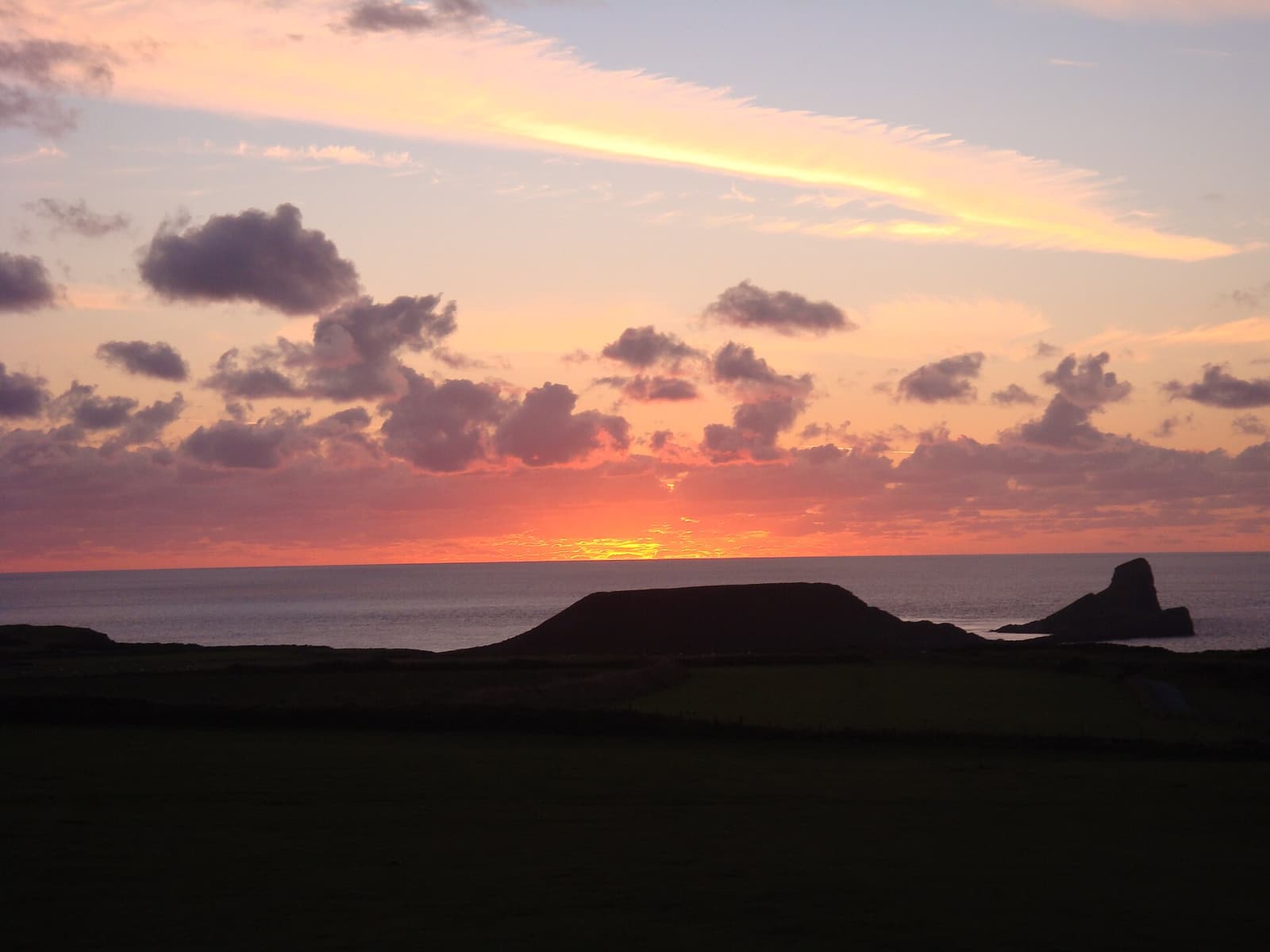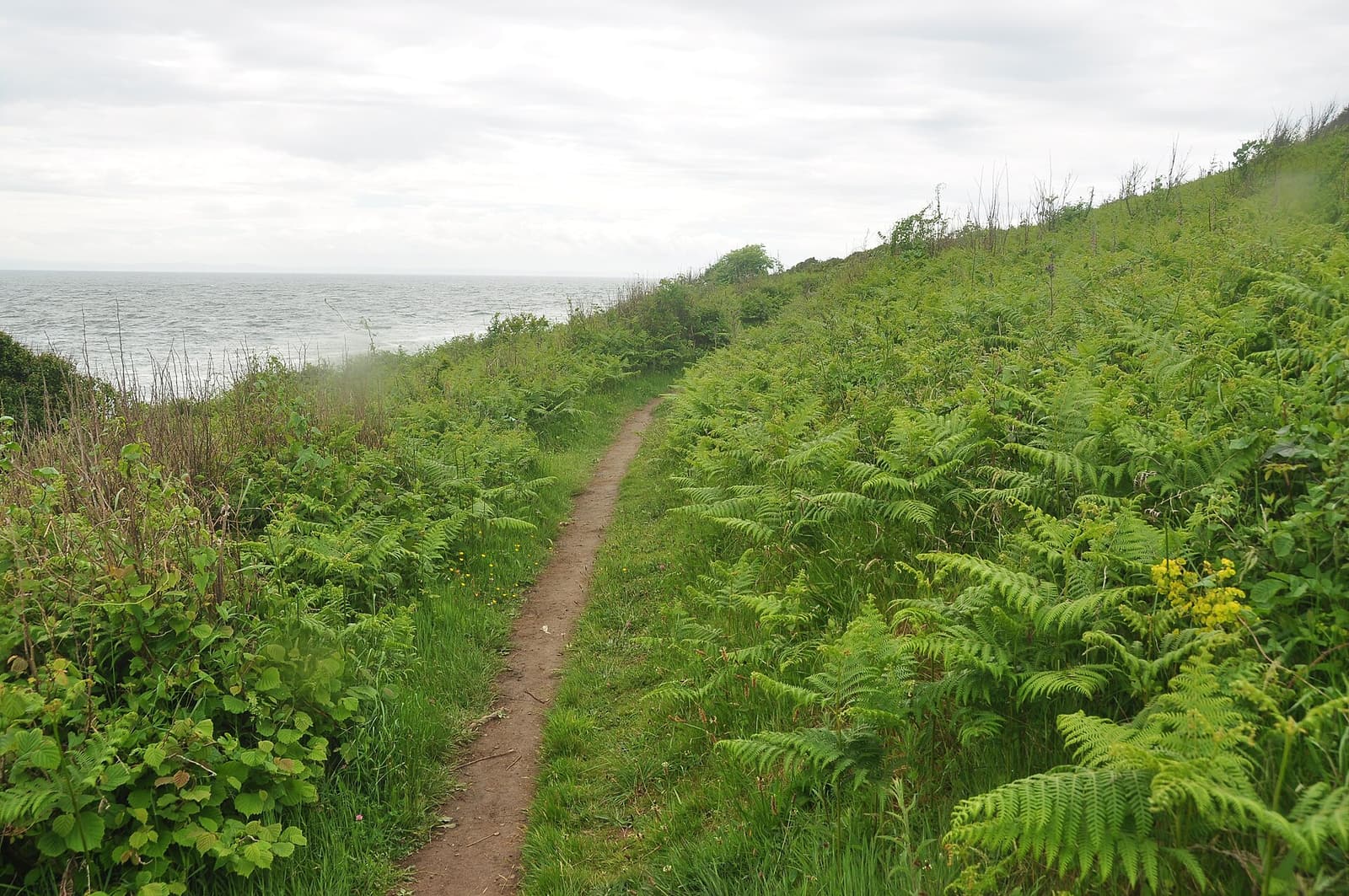
Swansea Bay (Bae Abertawe) is the stretch of the South Wales coast between Port Talbot and Mumbles Head, and the name used for the holiday area around it: the city of Swansea, the seaside village of Mumbles and the Gower Peninsula. It is one of the few places in Britain where you can be in a national museum at eleven and alone on a cliff path by one.
Swansea Bay at a glance
- Where: South-west Wales, 40 miles west of Cardiff, on the Bristol Channel.
- Swansea: Wales’s second city, with around a quarter of a million people. Welsh name: Abertawe.
- Gower: a peninsula about 16 miles (26 km) long and 7 miles wide, designated Britain’s first Area of Outstanding Natural Beauty in 1956.
- Languages: English and Welsh. Signs are bilingual.
- Currency: pound sterling (£). Cards and contactless are accepted almost everywhere.
- Known for: beaches, coast walking, surfing, Dylan Thomas, cockles and laverbread.
A short history
The name Swansea is Viking — probably “Sveinn’s island”, after a Norse trader at the river mouth — while the Welsh Abertawe simply means “mouth of the Tawe”. The Normans built a castle here in the early 1100s and settled the fertile south of Gower so thoroughly that it became an English-speaking “Little England” while the north stayed Welsh; you can still read the divide in the village names.
In the 18th and 19th centuries, Cornish ore and local coal made the lower Swansea Valley the centre of world copper smelting, and the town earned the nickname Copperopolis. The wealth built the docks, the museums and the villas of the Uplands; the fumes poisoned the valley for a century. In 1807 a horse-drawn tramroad along the bay to Mumbles began carrying paying passengers — the first passenger railway service anywhere.
Three nights of bombing in February 1941 destroyed the town centre. Swansea was rebuilt, became a city in 1969, greened its industrial wasteland and turned its docks into a marina. The poet who grew up here between the wars has become its best-known export.
What to see
The essentials are below; all thirteen of our place guides are on the things to do page.
 Gower Peninsula
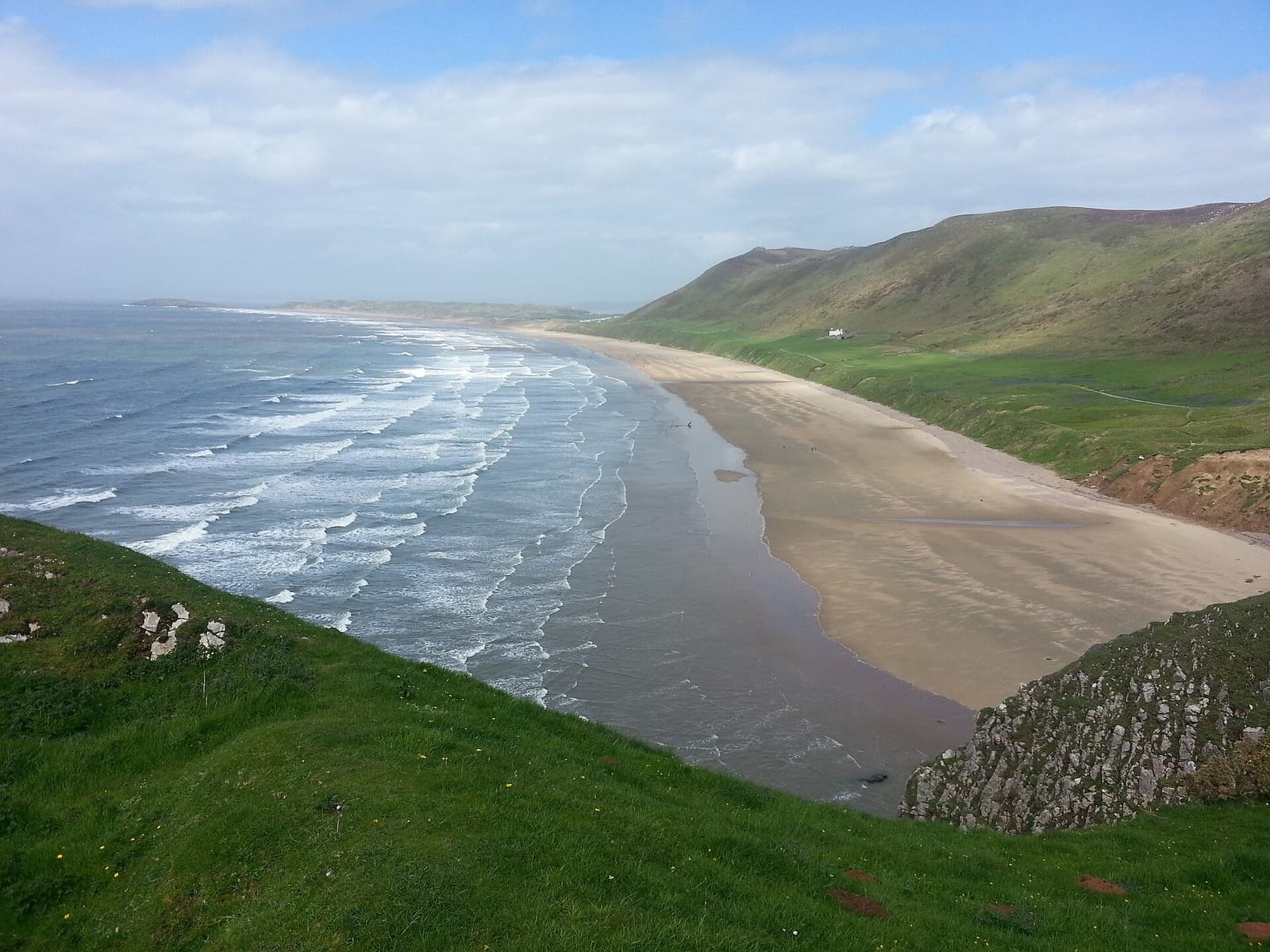
 Rhossili Bay & Worm’s Head
Three miles of sand and a tidal island at the end of Gower
Rhossili is the view that sells Gower: a three-mile sweep of sand below a 200-metre down, ending in the sea-serpent outline of Worm’s Head. The cliff-top walk is easy and unforgettable; crossing to the Worm itself is only possible for a few hours around low tide.
 Gower Peninsula
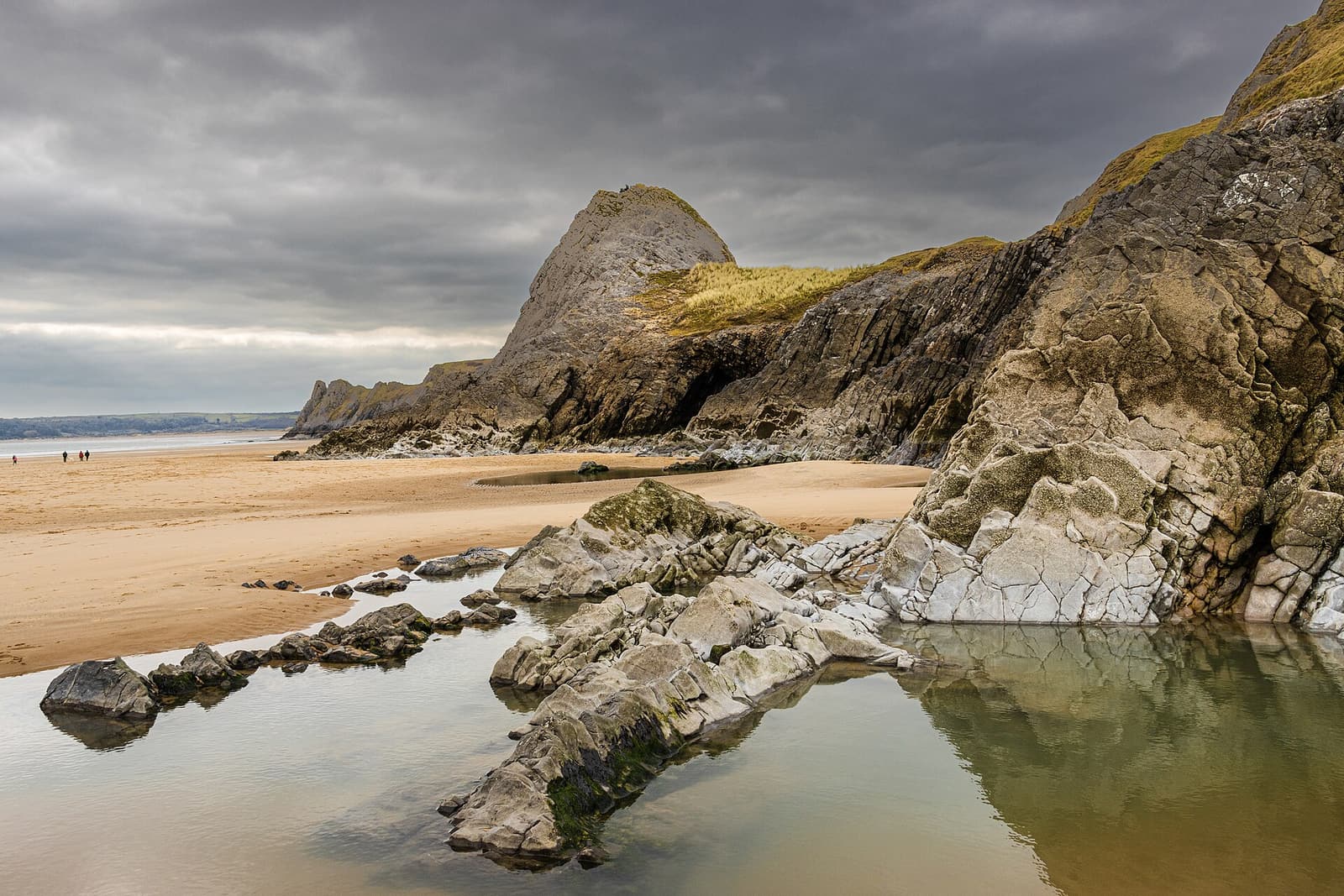
 Three Cliffs Bay
Gower’s postcard: three peaks, a river and a ruined castle
Three limestone peaks, a looping river, salt marsh, dunes and a castle ruin on the skyline — Three Cliffs Bay packs every Gower landscape into one view. There is no road to the beach, which keeps it wild; you walk in from Southgate, Penmaen or Parkmill.
 Swansea & Mumbles
 Mumbles
Pier, castle, ice cream and the gateway to Gower
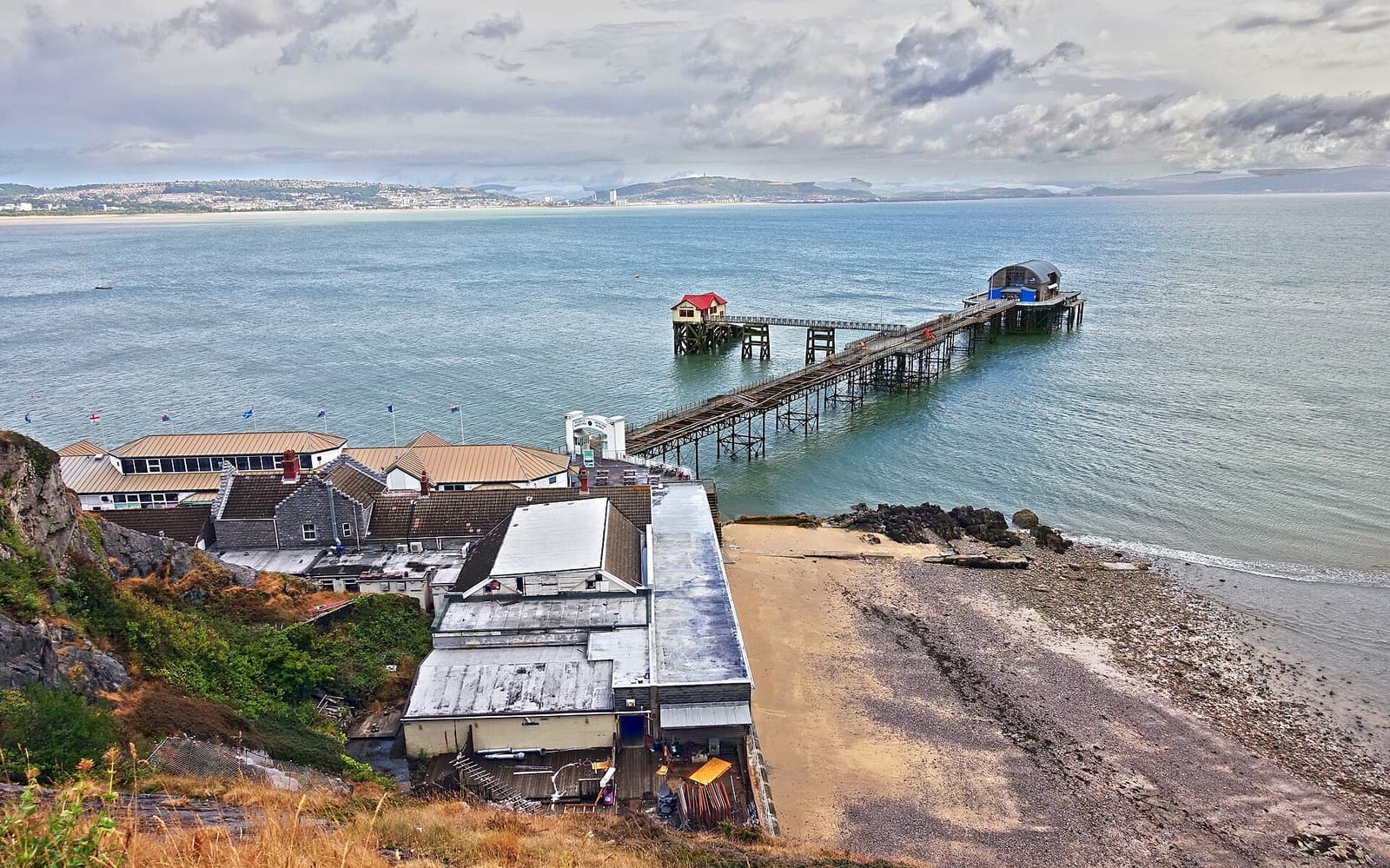
At the western tip of Swansea Bay, Mumbles is a fishing village grown into Swansea’s favourite seaside outing: a Victorian pier, a lighthouse on its islets, Oystermouth Castle on the hill, independent shops and some of the best places to eat on the bay.
 Swansea & Mumbles
 Swansea Marina & Maritime Quarter
Museums, yachts and a city beach, all on the flat
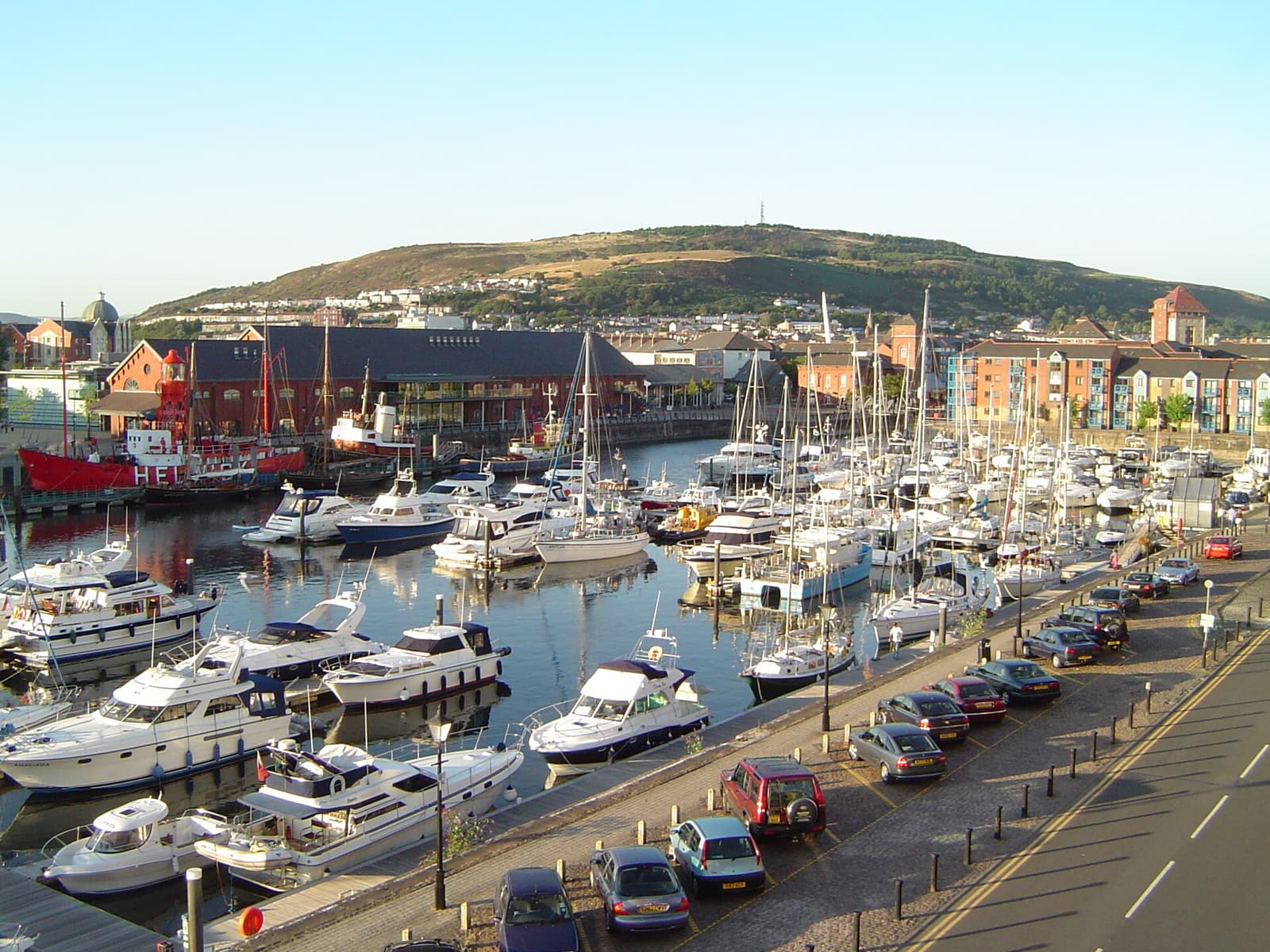
Swansea’s old South Dock is now a marina ringed with museums, cafés and apartments, with the city beach just over the sea wall. The National Waterfront Museum, Swansea Museum, the Dylan Thomas Centre, the LC waterpark and Swansea Arena are all within a ten-minute walk of one another.
Suggested itineraries
One day
Take a guided Gower tour, or do it yourself: the morning bus to Rhossili for the cliff walk, back via Parkmill for the walk to Three Cliffs Bay, and the evening in Mumbles for fish and chips and ice cream on the seafront.
Two days
Day 1 — city and bay: Swansea Market for breakfast cockles and Welsh cakes, the National Waterfront Museum and Dylan Thomas Centre, then walk or cycle the promenade to Mumbles for Oystermouth Castle and dinner. Day 2 — Gower: as the one-day plan above.
Three to four days
Add a slower Gower day — Caswell and Langland for a swim or surf lesson, or Oxwich and Port Eynon — and a day inland among the waterfalls of the Brecon Beacons. Literature lovers should swap one of these for Laugharne.
Beaches, tides and safety
The Bristol Channel has one of the largest tidal ranges in the world — up to around 10 metres at Swansea on spring tides. That is what makes the beaches so vast at low water, and what makes the tide the first thing to check each morning.
- Check tide times before any beach walk, and always before crossing to Worm’s Head, Burry Holms or the Mumbles islets. People are cut off every year.
- Swim at lifeguarded beaches — typically Caswell, Langland, Port Eynon and others in the summer season — between the red-and-yellow flags.
- Respect rip currents, particularly at Three Cliffs Bay and Llangennith.
- In an emergency on the coast, dial 999 (or 112) and ask for the Coastguard.
- Dogs are banned from several beaches between 1 May and 30 September, including Caswell, Langland, Bracelet Bay and parts of Port Eynon and Swansea Bay; many others, including Rhossili, welcome them all year.
Walking the Wales Coast Path
The 870-mile Wales Coast Path runs right around the bay and the peninsula; the Gower section is about 39 miles (62 km) and makes a superb three- or four-day walk. The finest day stages are Mumbles to Caswell (easy), Southgate to Oxwich via Three Cliffs, and Port Eynon to Rhossili (the best of all). Buses make most one-way stages possible.
Food and drink
- Cockles and laverbread — the classic Swansea breakfast, with bacon. Try them in the market.
- Welsh cakes — griddled, spiced and best eaten warm.
- Gower salt-marsh lamb — from flocks grazed on the north-coast marshes; on good local menus in summer and autumn.
- Seafood — sea bass, mussels and crab in Mumbles and Oxwich.
- Joe’s ice cream — made in Swansea since 1922.
- Local drinks — Gower-brewed ales, Welsh gin and Penderyn whisky, which you can see being made on a distillery tour in the old copperworks.
For restaurants head to Mumbles, the Uplands, the marina and Wind Street. Country pubs on Gower mostly stop serving food by about 9 pm — earlier out of season.
Money and costs
Wales uses the pound sterling. Contactless cards and phones are accepted almost everywhere, including on buses; carry a little cash for rural car parks and beach kiosks, some of which still take coins only. Many of the best things here are free: the beaches, the coast path, the two main museums, the Dylan Thomas Centre, the Glynn Vivian gallery and Clyne Gardens. A service charge or tip of around 10–12% is usual in restaurants if service is not already included.
Weather and what to pack
The climate is mild, breezy and changeable, and Swansea is one of the wetter cities in Britain. Summer days are typically 18–21 °C; winter days 7–9 °C, with frost and snow rare on the coast. Pack a waterproof jacket and a warm layer at any time of year, comfortable walking shoes with grip, sun cream (the sea breeze disguises the sun) and swimwear. A wetsuit makes the sea comfortable from May to October and can be hired at surf beaches. More detail in when to visit.
Language
Everyone speaks English, and about one in ten people in Swansea also speak Welsh — more in the villages to the north and west. Signs put Welsh first or alongside English. A few words go a long way:
- Bore da (“BOR-eh dah”) — good morning
- Diolch (“DEE-olkh”) — thank you
- Croeso (“CROY-so”) — welcome
- Iechyd da (“YEKH-id dah”) — cheers
- Traeth — beach · Bae — bay · Llwybr — path · Araf — slow
Practical information
- Electricity: 230 V, three-pin type G plugs. Visitors from the Continent need an adaptor.
- Emergencies: 999 or 112 for police, ambulance, fire and Coastguard. Morriston Hospital in Swansea has the area’s emergency department.
- Mobile signal: good in the city, patchy in west Gower and in the gorges of waterfall country. Download maps before you go.
- Accessibility: the promenade, marina, museums and the Caswell–Langland path are level and step-free. Beach wheelchairs can be borrowed at some beaches in summer — ask locally.
- Tourist information: there is no large staffed tourist office; museums, the National Trust shop at Rhossili and your hotel are the best sources of local advice.